Lozi Traditional Attire
The Siziba, the Musisi, and the royal regalia — garments that tell the story of a kingdom, its people, and their dignity across centuries.
Fashion Born from Royalty & History
Lozi traditional attire has roots stretching deep into Barotseland — long before colonial contact. The Siziba (men) and Musisi (women) are the two defining garments of Lozi cultural identity, worn at Kuomboka, weddings, kitchen parties, and all significant ceremonies.
The story of Lozi attire is inseparable from the story of King Lewanika I's 1902 visit to London for the coronation of King Edward VII. Upon his return, dressed in dignified British regalia, the Lozi people sought to emulate their king's appearance — and in doing so, created something entirely their own.
Today the Siziba has transcended its Lozi origins to become a symbol of Zambian national identity — worn across the country by people of all ethnic backgrounds. The Musisi, with its dramatic peacock-like silhouette, is one of the most distinctive garments in all of southern Africa.
At Kuomboka, thousands of people line the Zambezi banks dressed in Siziba and Musisi — a sea of Lozi identity watching their king make his sacred journey.
The Scottish Kilt Comparison
Some compare the Siziba — where men wear a wrap skirt — to the Scottish kilt. The Siziba existed among the Barotse community long before white settlers arrived, and carries its own unique cultural meaning entirely separate from any external influence.
Three Defining Attires of Kuomboka
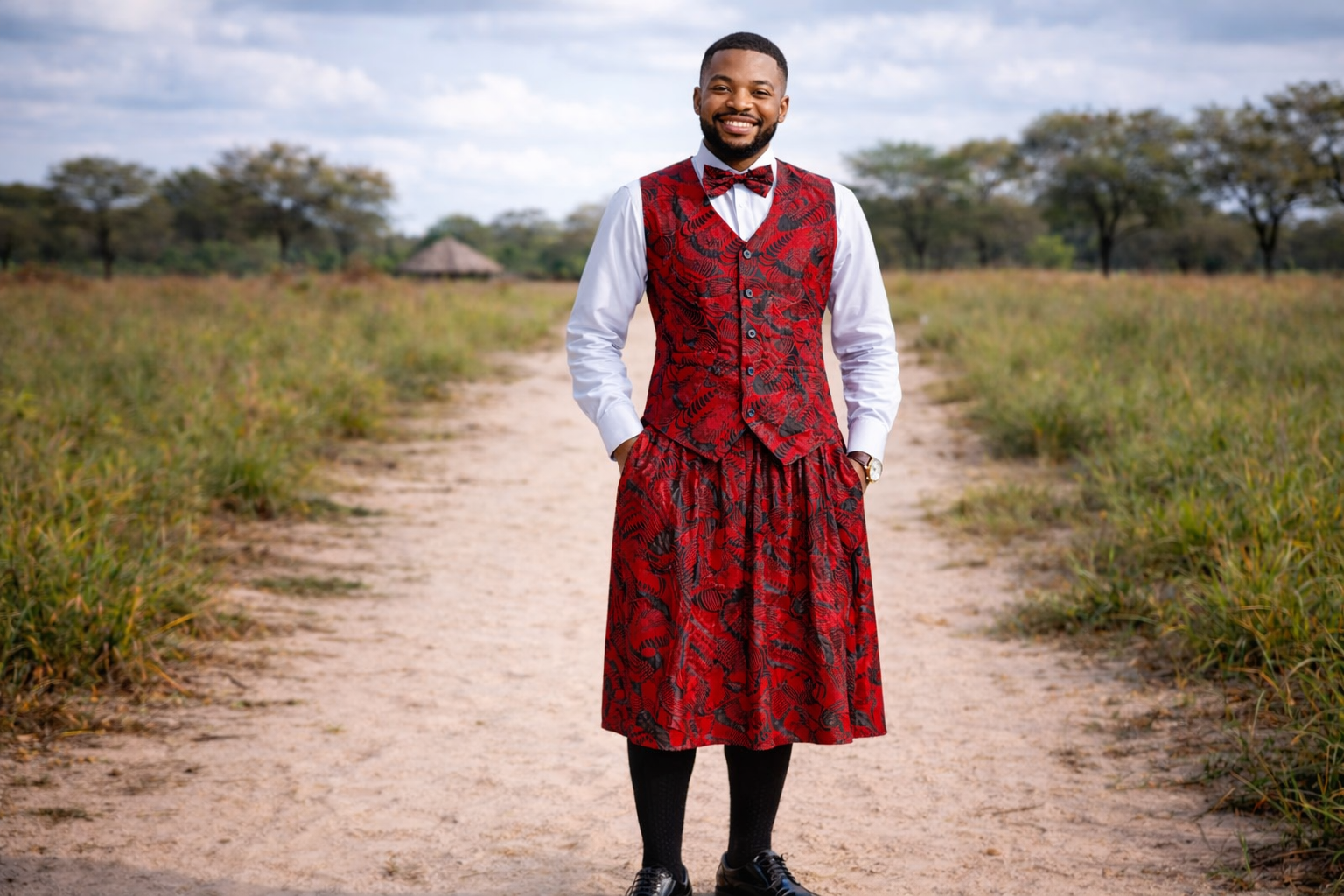
The Siziba — literally "a piece of cloth" — is the traditional formal dress of Lozi men. Originally reserved for royals and dignitaries at Kuomboka, it has grown into a symbol of Zambian national identity worn across all ethnic groups.
Inspired by King Lewanika's 1902 visit to London, the Siziba blends Edwardian military aesthetics with indigenous design. It consists of a crisp white shirt, a chitenge wrap skirt (longer at the front than the back), and long white stockings. Men often carry the Mulamu — a ceremonial wooden walking stick, once used for defence and now a mark of authority and dignity. A red beret (Lishushu) is worn by paddlers and ceremonial participants.
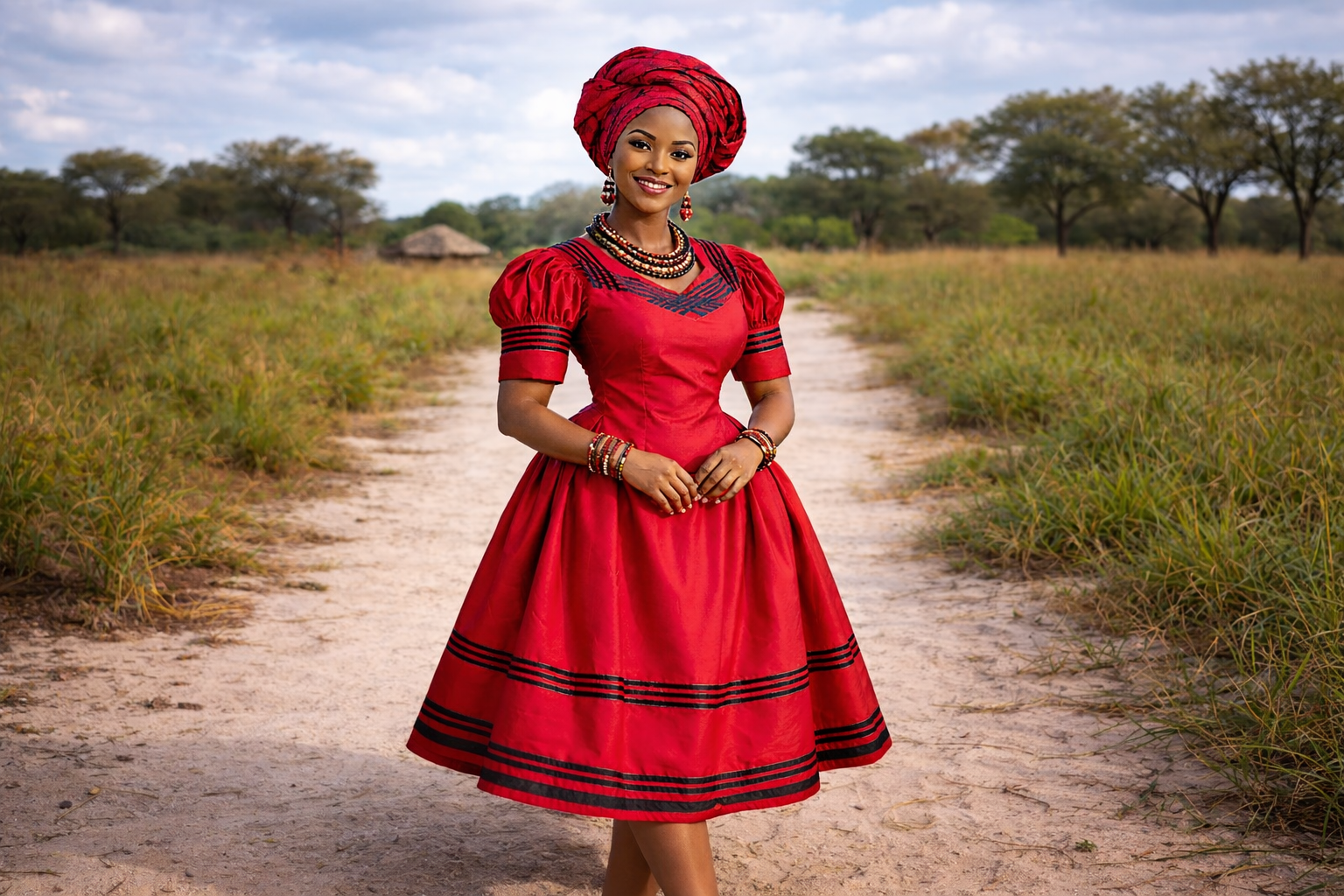
The Musisi (plural: Misisi) is one of the most visually striking traditional garments in southern Africa. Its distinctive bell-like, peacock silhouette — said to resemble the Liowanyi (peacock) — comes from a three-layer system: two inner skirts building volume, and a heavy outer layer defining the dramatic shape.
The back part is longer than the front — the opposite of the Siziba — creating the graceful sweeping effect that makes women in Musisi immediately recognisable. Worn with a matching blouse called the Baki, and a small decorative wrapper known as the Chali. The name Musisi comes from "Misisi" — the way early Lozi referred to the missionary wives whose Victorian-era dresses inspired the garment's evolution.
The Litunga begins Kuomboka dressed in full Lozi royal regalia — a gold beaded skirt, royal shirt, and round ceremonial hat. This attire was first given to Litunga Lewanika by the British in the 1800s as recognition of his diplomatic role, and has been worn by every Litunga since.
Mid-journey aboard the Nalikwanda, the Litunga changes into the full British Royal Naval Admiral's uniform — presented by King Edward VII in 1902, complete with gold epaulettes, medals, and an ostrich-plumed hat. This transformation on the water — from African royal to British Admiral and back to Lozi king — symbolises the Litunga as a figure who bridges two worlds. It is one of the most visually powerful moments in African ceremony.
The Scarlet Beret — A Mark of Honour
Being selected as one of the 100–200 paddlers on the Nalikwanda is considered one of the greatest honours a Lozi man can receive. It is a mark of distinction carried for life.
Each paddler wears a specific ceremonial dress:
Before departure, the paddlers sing songs about how the great Nalikwanda was built by the Lozi people, and songs of praise for the strength, bravery, and tact of the paddlers.
What to Wear to Kuomboka
Attending Kuomboka in traditional Lozi dress is warmly welcomed and deeply appreciated by the community. It is a sign of respect and cultural solidarity.
Wear the Siziba — white shirt, chitenge wrap skirt, white stockings. Carry a Mulamu walking stick if available. Siziba can be sourced from tailors in Mongu before the ceremony.
Wear the Musisi — the three-layered bell skirt with Baki blouse and Chali wrapper. At Kuomboka, women in Musisi line the banks singing Limeka to welcome the Litunga. It is a participation in the ceremony itself.
Dress modestly and respectfully. Lightweight, breathable clothing for the heat. Bring waterproof layers — you will be near open water all day. Avoid white clothing near the royal barge area.
Essential Phrases for Every Visitor
A few words of Silozi will open doors and hearts across Barotseland. The Lozi people deeply appreciate visitors who make the effort.